
When Should a Child Start Learning the Qur'an?
8 min read
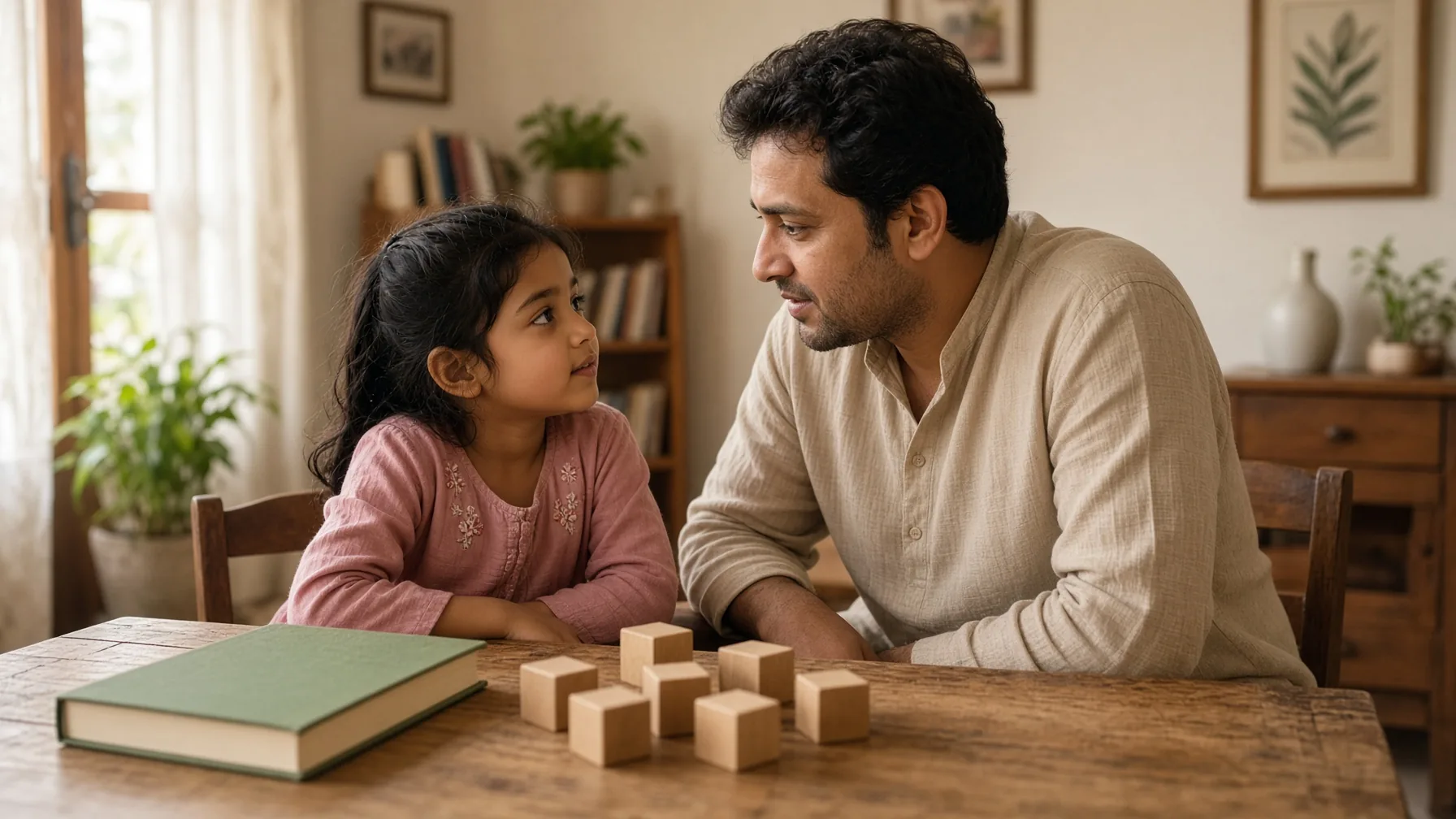
Hearing the Qur'an can begin early. Formal reading can wait until the child can sit and copy a sound.
Parents often ask for an age. There is not one. Some children enjoy letters at five. Others are happier listening until six or seven. Starting earlier is not automatically better, and starting later is not a loss you need to repair in a hurry.
The Qur'an says it has been made accessible for remembrance (Surah al-Qamar 54:17). That is an encouragement, not a timetable. Readiness is about attention, hearing, and a willingness to try a short task.
Early exposure is not the same as a lesson
A small child can hear short surahs in the house, sit nearby at prayer, and learn a few phrases by echo. That is exposure. A lesson is different: the child looks at a mark, says a sound, and tries again when it is off. Those two things can overlap, but they should not be confused.
Signs a child may be ready for letters
Look for ordinary school-readiness signals, not a religious test.
- They can sit with you for about ten minutes without distress.
- They can copy a sound after they hear it.
- They notice when two sounds are different, at least some of the time.
- They are not frightened of being corrected.
- Home life is steady enough that a new daily task will not overload them.
A loose stage guide
This is a teaching sketch. Children move through it at different speeds. Do not use it to rank them.
Early childhood
Focus on hearing, a few short surahs, and warm association. Formal letters can wait. If you do show letters, keep it playful and stop while it is still pleasant.
Primary years
This is often a good time for the alphabet, joining letters, and slow reading. Tajweed can begin as “say it the way you heard it,” not as a list of rule names. Islamic studies — basic beliefs, manners, and simple stories of the Prophet, peace be upon him — can sit beside the reading.
Pre-teen years
Reading should be more independent. A teacher can now name a few rules, because the child can hold an idea and apply it on the next line. Memorisation, if you choose it, works better when reading is already reliable.
Teenage years
Many teenagers restart after a gap. Treat that as normal. A bridge from their actual level is more respectful than placing them with much younger beginners or pretending they remember everything. Understanding, not only recitation, starts to matter to them.
What you can realistically expect
In a few months of short practice, a ready child can usually learn to recognise letters and read simple joined words with help. Fluency and reliable Tajweed take longer, and they depend on correction. Comparing your child with a cousin’s hifz timetable is one of the fastest ways to make them dislike the book.
Frequently asked questions
Is five the right age?
Five can be right for some children and early for others. Readiness matters more than the birthday.
What if we start at nine or ten?
That is a common and workable start. Begin from letters if reading is new. Do not skip to memorisation to catch up.
Should Islamic studies wait until they can read?
No. Manners, simple beliefs, and stories can be taught by conversation at any age.
Is a late start a religious problem?
Nothing in a responsible reading of the Qur'an sets a penalty for beginning at eight instead of four. Start when the child can learn without fear.
How do I know the class level is right?
Ask for a short placement conversation. A good programme starts from what the child can already read, not from a fixed page.
Darul Ma'rifah Academy’s children’s programme is for ages 5–15 and starts from the child’s level. It is live, and it runs for three months before a level test.
See the children’s programme